
What is Monkeypox?
Is another epidemic ahead of us? The World Health Organization has declared this disease a global health threat. In June, the disease arrived in Poland, and in total...
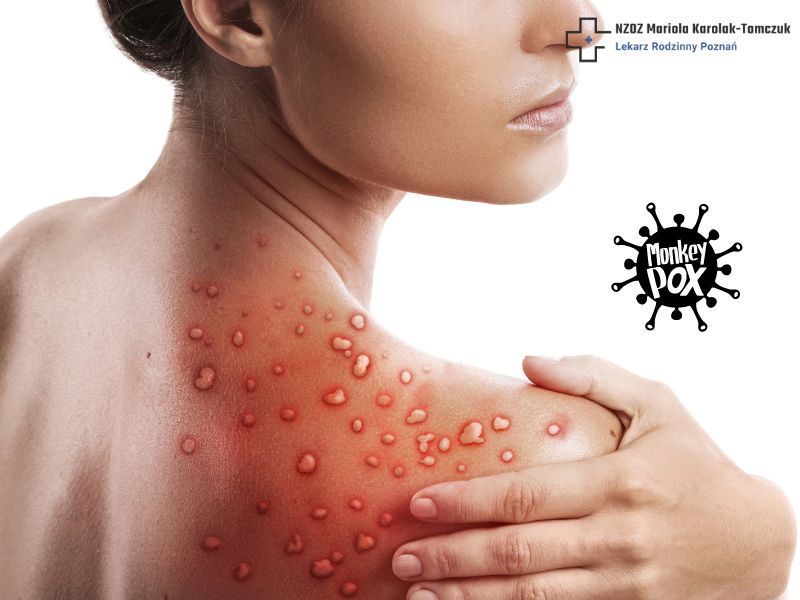
Is another epidemic ahead of us? The World Health Organization has declared this disease a global health threat. In June, the disease arrived in Poland, and in total, it has already appeared in 70 countries worldwide. This is excluding Africa, where it occurred endemically. What is monkeypox? How can you become infected and what are the first symptoms? It is difficult to confirm this disease, but much easier to prevent it.
What is monkeypox?
Monkeypox is a rare viral infection that is similar to smallpox. It most commonly occurs in Africa, where it is believed to be transmitted from animals to humans. The virus can cause fever, rash, and lymphadenopathy (swollen lymph nodes). Monkeypox is considered a serious public health issue due to its similarity to smallpox and the potential to cause a global epidemic. There is no specific treatment for monkeypox. In most cases, it is a mild disease, but in some cases, it can be fatal.
Where did monkeypox come from?
Monkeypox is a zoonotic disease that occurs mainly in rural African countries (Benin, Democratic Republic of the Congo, Central African Republic, Sierra Leone, Cameroon). It is believed that the monkeypox virus originates from wild animals and spreads to humans through contact with the blood or body fluids of an infected animal. How can you get infected? The infection is caused by a virus of the genus Orthopoxvirus. Rodents (squirrels) are most often responsible for monkeypox infection, rather than monkeys as the name suggests. It most commonly occurs through a bite from a given animal. In Europe, it appeared for the first time in the United Kingdom, where it was brought from the Nigerian area. A high number of cases poses a significant threat to Western societies.
Monkeypox - causes
Monkeypox (ang. monkey pox) is a rare viral infection that is similar to smallpox. It occurs mainly in Africa, and most cases in the United States have been linked to travel to Africa. New York is considered the epicenter. The monkeypox virus spreads through contact with an infected animal or person, usually through a bite or close contact with pox lesions. The incubation period (the time from exposure to the onset of symptoms) for monkeypox is usually 7-14 days, but can be as long as 21 days. The mortality rate is approximately 10%.
Monkeypox - symptoms
Symptoms of monkeypox include fever, headaches, muscle aches, backaches, swollen lymph nodes, chills, and exhaustion. Rash-like vesicles develop 1-5 days after the onset of fever, starting on the face and then spreading to other parts of the body. The rash eventually forms blisters filled with pus and then crusts over. Monkeypox is usually a mild disease in humans, but in some cases, it can be fatal. Monkeypox should not be confused with chickenpox.
How to treat monkeypox?
There is no specific treatment for monkeypox, but patients may receive supportive care to alleviate symptoms. Many people use the smallpox vaccine, which is reportedly about 85% effective. Smallpox vaccinations are popular in many countries. Transmission of the disease between sick individuals is extremely rare.