
Season at the Lake: How to Safely Transition from Winter Swimming to Regular Swimming and What to Watch Out for in the Water?
For many of us, relaxing by the water is an inherent part of the spring and summer landscape of Wielkopolska. Lake Maltańskie, Strzeszynek, or Kiekrz attract recreation enthusiasts from the very first warm days...
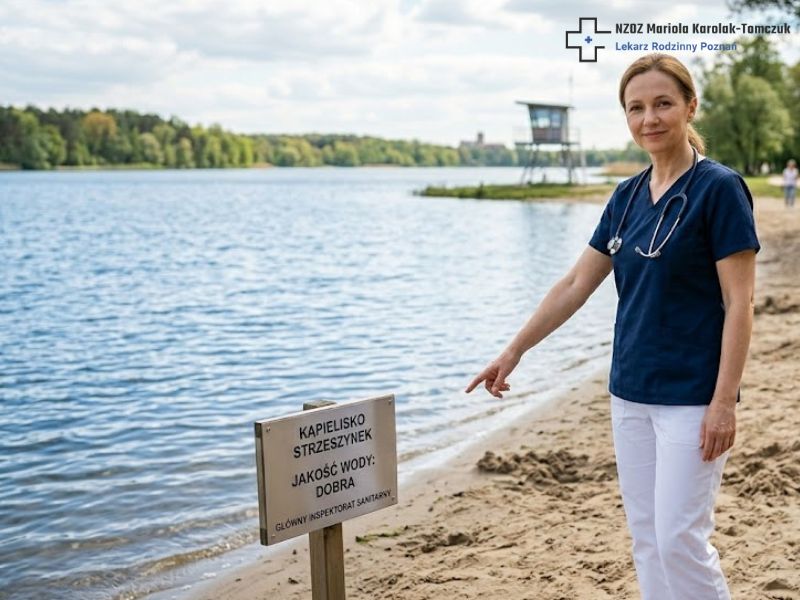
For many of us, relaxing by the water is an inherent part of the spring and summer landscape of Wielkopolska. Lake Maltańskie, Strzeszynek, or Kiekrz attract recreation enthusiasts from the very first warm days. However, the transition from the winter to the summer season requires attention from our bodies, and nature itself can be surprising.
When is it safe to end the winter swimming season and start regular swimming? What microorganisms and animals can we encounter in Polish water reservoirs? As your primary care physician team, we have prepared a guide to clear up the most common doubts and myths.
From Frost to Sun: When to End Winter Swimming and When to Start Regular Swimming?
The boundary between the season for "morsy" (winter swimmers) and the season for classic swimmers is fluid, but it is defined by specific biological and physiological parameters.
- End of the winter swimming season: Experienced winter swimmers usually end their season at the turn of March and April, when the water temperature begins to exceed 8-10°C. Water at this temperature no longer triggers such a strong thermal shock and endorphin release in the body, and the sun begins to shine more intensely, which changes the specifics of how the body adapts to the cold.
- Recreational swimming before the "bloom": A safe, comfortable temperature for classic swimming is considered to be around 18-20°C. It is worth taking advantage of the late spring and early summer period (May and June). This is a time when the water is already warmed up, but mass growth of microorganisms, commonly known as a "lake bloom," has not yet occurred.
Where to check water quality? Before you jump into the water, always check its current microbiological status. The most reliable source of information is the official, publicly accessible Bathing Service of the Chief Sanitary Inspectorate (sk.gis.gov.pl), where research results from legal bathing sites across Poland are published.
Invisible Enemies: Cyanobacteria and E. coli Bacteria
The phenomenon of water "bloom" is nothing more than the mass multiplication of algae and cyanobacteria. This most often happens during prolonged heatwaves, with high water temperatures (above 20°C), a lack of wind, and no precipitation.
Cyanobacteria (Blue-green algae)
Contrary to popular belief, they are not algae, but bacteria. They form dense, greenish, scum-like patches on the water with an unpleasant odor.
- What are the risks? Cyanobacteria produce toxins dangerous to health (including dermatotoxins and hepatotoxins).
- Symptoms: Simply swimming in contaminated water can cause severe allergic reactions, hives, itchy skin, and conjunctivitis. In turn, accidental ingestion of water with cyanobacteria leads to acute poisoning: nausea, vomiting, abdominal pain, fever, and in extreme cases - damage to the liver or nervous system.
Escherichia coli (E. coli) Bacteria
The presence of this bacteria in a bathing area indicates fecal contamination (e.g., from field runoff or leaking septic tanks).
- What are the risks? Rinsing your mouth or accidentally drinking such water is a simple recipe for a violent gastrointestinal infection.
- Symptoms: Severe watery diarrhea, painful abdominal cramps, vomiting, and high fever. In children and the elderly, dangerous dehydration can occur quickly.
Fauna of Polish Lakes: Facts, Myths, and Underwater Monsters
Many legends have grown around the animals living in our lakes. What is the truth, and what can we dismiss as fairy tales?
Can a pike bite a person?
Yes, but these cases are extremely rare and almost always accidental. The pike is a predator with hundreds of needle-sharp teeth; however, it hunts fish and waterfowl. Humans are not its target. A bite can occur when a swimmer moves a foot or hand suddenly in murky water, and the fish mistakes the flash of skin or a fingernail for the movement of a small fish. The wounds can be painful, but they are not life-threatening.
Piranhas in Polish waters - fact or myth?
It is a fact, but with a biological catch. Every year, reports appear in the Polish media about piranhas being caught (e.g., in the Warta River or lakes near Poznań). These are fish irresponsibly released by aquarium hobbyists. In most cases, they are so-called Red-bellied Pacu - herbivorous cousins of the piranha with powerful teeth that do not attack humans. True, carnivorous piranhas would not be able to survive a Polish winter in the natural environment, so there is no risk of a piranha school attack while swimming.
Which insects and arthropods should you watch out for?
- Horseflies and deer flies: Their bites are painful and often cause a large allergic reaction.
- Ticks: They live in grasses and bushes directly adjacent to wild beaches.
- Springtails (Collembola): In the spring, a grey, "living" and jumping carpet can be seen on the water's surface. These are water springtails - small arthropods. They are often mistaken for dangerous insects; however, they are completely harmless to humans and do not bite.
Spring by the Lake: What Pollen is Present and What Causes Allergies?
A spring or early summer stay by the water is a significant challenge for allergy sufferers. Specific vegetation grows right on the lake shores, which pollinates intensely during this period:
- Trees: Willows, poplars, alders, and birches (their pollen can float on the water surface as a yellow film, often mistaken for sulfur or cyanobacteria).
- Grasses and reeds: Grass pollen is the main culprit for hay fever and watery eyes from May to July.
Unusual Allergies: Can You Be Allergic to the Sun or Water?
- Sun Allergy (Polymorphous Light Eruption): Absolutely. This is a real condition with an immunological basis. It manifests as an itchy rash, bumps, or blisters in areas exposed to UV rays (often after the first intensive sunbathing session of the season).
- Water Allergy (Aquagenic Urticaria): This is one of the rarest ailments in the world. It is not a classic allergy (after all, our bodies consist mainly of water), but a rare skin reaction where contact with water of any temperature triggers painful, itchy hives. Usually, however, what patients mistake for a "lake water allergy" is actually a reaction to chemicals, pollen, or the aforementioned cyanobacteria toxins present in it.
Short FAQ - Safe Recreation in Questions and Answers
1. I noticed yellow, thick dust on the lake. Is it toxic cyanobacteria?
Most likely not. In May and June, this is usually pine pollen or pollen from other trees that the wind blows onto the water surface. It is harmless to people without severe respiratory allergies. Cyanobacteria are greenish, bluish-green, or brown and form dense mats rather than loose dust.
2. What should I do if I get a rash after swimming in the lake?
Wash your entire body thoroughly under clean, running water. Apply a widely available soothing gel with an antihistamine or aloe. If the rash does not disappear after 2-3 days, spreads, or is accompanied by unbearable itching - consult your family doctor.
3. Do leeches live in Polish lakes and are they dangerous?
Yes, leeches live in clean, overgrown reservoirs. Encountering a horse leech (the most common in Poland) is harmless because it does not drink human blood. A medicinal leech may attach to the skin, but its bite is painless (it injects anesthetic substances). After noticing a leech, it should be gently pried off, and the wound should be disinfected.
4. How to distinguish a regular sunburn from a sun allergy?
A sunburn appears on anyone after too much exposure without sunscreen and resembles a uniform, stinging patch (like a thermal burn). A sun allergy manifests as a fine, very itchy rash (bumps, pustules) that can appear even after a few minutes spent in the sun in a predisposed person.
Important information for readers:
This blog article is for educational and advisory purposes only. The information contained herein cannot replace a personal medical consultation, diagnosis, or treatment plan by a qualified physician. If you or your child experience severe abdominal pain, high fever, shortness of breath, or extensive skin lesions after bathing in a water reservoir, contact our family doctor's clinic immediately or, in life-threatening situations, call the emergency number 112.