
First Aid Kit for a Vacation in Warm Countries: What to Pack and Why Your Doctor Won't Prescribe Antibiotics "Just in Case"?
Planning a vacation in exotic or simply warm countries - such as Egypt, Turkey, Greece, or Thailand - is accompanied by great excitement. When packing your suitcase...
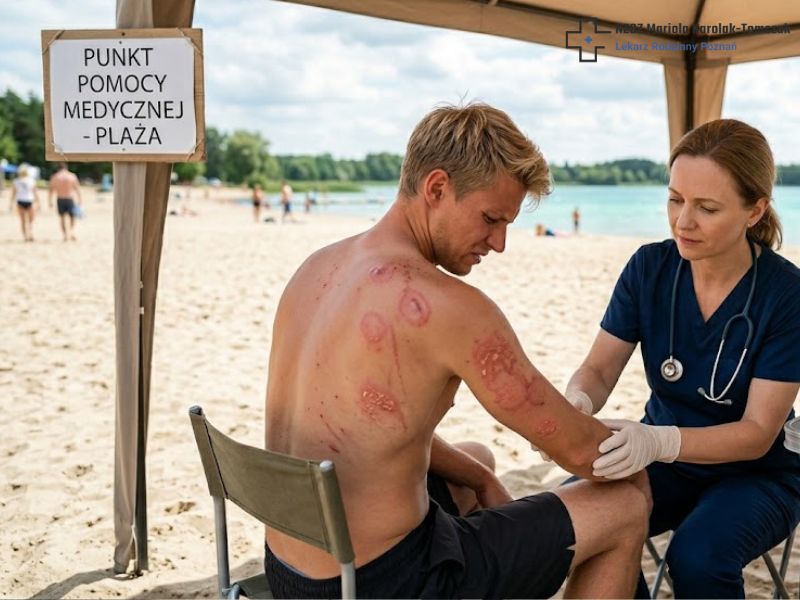
Planning a vacation in exotic or simply warm countries - such as Egypt, Turkey, Greece, or Thailand - is accompanied by great excitement. When packing your suitcase, however, it is easy to forget what is most important for our safety: a properly equipped first aid kit.
Many patients visit our clinic in Poznań just before departure with the question: "Doctor, maybe I should take an antibiotic prophylactically, just in case?". As your family doctor team, we answer this question and suggest what really should be in your holiday first aid kit.
Can you ask a doctor for an antibiotic "prophylactically"?
The short and direct answer is: The general rule is clear: NO.
A family doctor will not prescribe an antibiotic just in case, "for it to sit in the suitcase." Why do we take such a rigorous approach?
- Antibiotics only work on bacteria: Most holiday infections (up to 80-90%), such as colds, throat infections, or the famous "Pharaoh's Revenge" (often caused by viruses or new bacterial flora that the body simply needs to get used to), are viral infections. An antibiotic will not work on them and may even cause harm.
- Risk of side effects: Taking an antibiotic without a clear indication destroys our natural intestinal flora. In warm countries, where your digestive system is already exposed to stress, weakening the intestines with an antibiotic is a straight path to severe, long-term diarrhea.
- Drug resistance: Using antibiotics "blindly" makes bacteria resistant to them.
Significant exceptions - when will a doctor make a concession?
There are very few, medically justified situations in which a doctor may decide to write a prescription for an antibiotic before departure:
- Expeditions to extremely exotic, wild regions (so-called travel medicine): If a patient is going to places completely cut off from medical care (e.g., trekking in the jungle, deep Africa, or Asia), where access to a doctor and pharmacy is impossible for many days. In such cases, the doctor may prescribe a specific broad-spectrum antibiotic (e.g., azithromycin) with exact instructions on what final situations it can be used in.
- High-risk patients: People with severe chronic diseases, deep immune deficiencies, or those in whom every minor bacterial infection develops in a fulminant manner.
In standard cases (a hotel with an all-inclusive option in a resort), there is always a hotel doctor or local clinic on-site, which will select the appropriate, targeted medication if necessary.
What MUST be in your holiday first aid kit?
Instead of an antibiotic, your first aid kit should contain medications targeted at the most common traveler ailments. Here is a complete list:
1. Gastrointestinal problems (the basics in warm countries!)
Change in bacterial flora, different water, and spices often revolutionize our stomachs.
- Probiotics: It is worth starting to take them 3-5 days before departure and continuing throughout the trip. They support the intestines in fighting new bacteria.
- Anti-diarrheal medications: Loperamide (works quickly by inhibiting intestinal movements - useful, for example, during a flight) and diosmectite (Smecta), which binds toxins in the intestines.
- Electrolytes: Key in preventing dehydration during heat and poisoning.
- Medication for heartburn and indigestion: Stomach drops or antacid tablets.
2. Pain, fever, and the common cold
Air conditioning in hotels and coaches combined with the heat outside is a guarantee of a throat infection.
- Painkillers and antipyretics: Paracetamol and Ibuprofen (the latter also has anti-inflammatory properties).
- Throat lozenges and a nasal spray with sea water or a mild decongestant (for a runny nose from air conditioning).
3. Allergies and insect bites
- Antihistamines: Allergy tablets (e.g., with cetirizine or loratadine), even if you are not an allergy sufferer on a daily basis. New fruits, plants, or the sun can trigger a sudden reaction.
- Soothing gel: With hydrocortisone (0.5% ointment available over-the-counter) or dimetindene for itchy bites and allergic reactions.
4. Skin protection and first aid
- SPF 50+ sunscreen: Sun protection is an absolute priority.
- Panthenol or aloe vera gel: In case of sunburn.
- Dressing materials: Plasters with waterproof adhesive, alcohol-soaked swabs for disinfection, elastic bandage.
- Repellents: Mosquito and tick repellents (for warm countries look for those with a high concentration of DEET or Icaridin).
Short FAQ - Holiday First Aid Kit Best Practices
1. How to transport medications on a plane?
All medications (both those taken regularly and the first aid kit) are best packed in carry-on luggage. In the cargo hold, temperatures are very low, which can damage the structure of some medications (e.g., insulin or syrups). Liquid medications in carry-on luggage are not subject to the standard 100 ml limit if they are necessary during the trip, but they must be declared during the security check.
2. Do I need a doctor's certificate for my regular medications?
If you take medications for chronic diseases (hypertension, diabetes, etc.) in standard quantities for your own use, a certificate is usually not necessary (it is worth keeping them in their original packaging). The exceptions are psychotropic drugs, strong painkillers (opioids), and needles/syringes (e.g., for insulin). In their case, ask your family doctor for a short certificate in English.
3. Can I buy medications at a local pharmacy in Egypt or Turkey?
Yes, local pharmacies are usually very well-stocked, and pharmacists in resorts speak English. Remember, however, that medications may exist under completely different brand names. It is worth knowing the international name (active substance) of the medication, rather than its Polish name (e.g., instead of "Apap," ask for Paracetamol).
Important information for readers:
The presented blog article is for educational and advisory purposes only. The information contained herein cannot replace a personal medical consultation, diagnosis, or treatment plan by a qualified physician. If you plan to travel to tropical regions, consult a travel medicine specialist at least 4-6 weeks before your trip to determine a plan for any protective vaccinations. In the event of a sudden deterioration in health while on vacation, immediately seek help from local medical services or contact your insurer.