
Wasp, Hornet, or Blackfly Bite: Regular Swelling or an Allergic Reaction? A Patient's Guide for the Peak Season
July and the August heat are the times of peak activity for Hymenoptera insects and bothersome blackflies. Spending time outdoors - in home gardens, at Poznań's Cytadela, or...
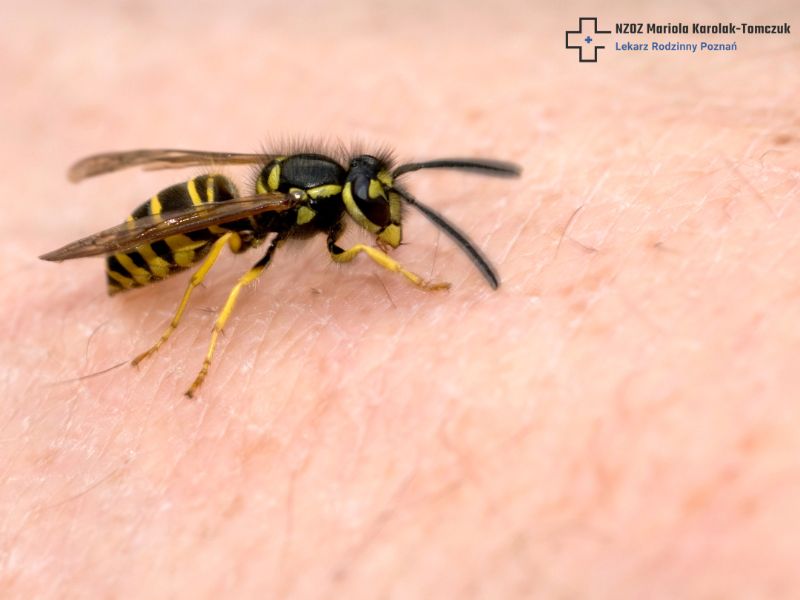
July and the August heat are the times of peak activity for Hymenoptera insects and bothersome blackflies. Spending time outdoors - in home gardens, at Poznań's Cytadela, or by the lake - carries the risk of a painful bite or sting.
Most encounters with wasps, bees, or blackflies result only in short-term pain and localized swelling. However, there are situations where the body's reaction is much stronger. How do you distinguish a typical post-bite reaction from a dangerous allergy or anaphylactic shock?
Typical Reaction vs. Strong Allergic Reaction - How to Tell the Difference?
Our body's reaction to insect venom or saliva can take various forms. It is worth knowing what falls within the normal range and what requires medical consultation:
1. Normal (Local) Reaction:
- Pain, burning, and redness at the site of the bite/sting;
- Small swelling (usually up to a few centimeters in diameter);
- Itching of the skin lasting for several hours or 1-2 days.
2. Large Local Reaction (often allergic in nature):
- Swelling with a diameter exceeding 10 cm, which increases during the first 24-48 hours;
- Severe redness, hardness, and warmth of the skin around the bite site;
- Persistence of symptoms for longer than 3-5 days;
- Sometimes accompanied by a feeling of malaise or a low-grade fever.
3. Generalized Allergic Reaction and Anaphylaxis (LIFE-THREATENING CONDITION):
- Hives, itching, and swelling occurring all over the body (away from the site of the sting);
- Swelling of the lips, tongue, throat, or wheezing and shortness of breath;
- Dizziness, drop in blood pressure, weakness, or even loss of consciousness;
- Nausea, vomiting, severe abdominal pain.
Important: In the event of generalized symptoms or shortness of breath, call the Emergency Medical Services immediately (number 999 or 112).
Step-by-Step First Aid After a Sting
If a sting occurs, quick action can significantly limit pain and the size of the swelling:
- Remove the stinger (if it's a bee): Do this gently by scraping it with a fingernail or a credit card. Do not squeeze the venom sac with tweezers or fingers to avoid injecting residual venom.
- Clean the site: Wash the skin with soap and water or a disinfectant.
- Apply a cold compress: A cold pack made of ice wrapped in a towel or Altacet will reduce swelling and soothe the pain.
- Apply topical medications: Antihistamine or astringent ointments and gels (e.g., over-the-counter hydrocortisone) can be helpful.
- Take an anti-allergy medication: In case of severe itching or extensive swelling, it is worth taking a widely available 1st or 2nd generation antihistamine.
When to See a Primary Care Physician After a Bite?
Most stings do not require immediate medical intervention; however, there are situations where it is worth consulting a family doctor:
- When the swelling and redness are very large, increase day by day, and hinder daily functioning (e.g., prevent bending an arm or walking);
- When the sting occurred in the area of the mouth, throat, or neck (even without a known allergy, there is a risk of airway swelling);
- When symptoms of a bacterial wound infection appear (increasing pain after a few days, purulent discharge, bright red streaks on the skin leading away from the wound, high fever);
- When there were many stings simultaneously (e.g., by a swarm of wasps or hornets).
People needing an examination or a prescription for stronger anti-inflammatory and anti-allergic drugs can conveniently book an appointment online. Patients looking for permanent medical care in Poznań will find all necessary information in the new patient registration section.
Frequently Asked Questions (FAQ)
1. Is a hornet sting significantly more dangerous than a wasp sting?
Hornet venom contains slightly different proportions of irritants, which makes the sting sometimes more painful; however, its toxicity for a non-allergic person is comparable to wasp venom. A hornet is not more dangerous unless the patient is allergic to its venom or multiple stings occur.
2. How to distinguish a blackfly bite from a wasp or bee sting?
Blackflies do not sting; they cut the skin and lap up blood. A blackfly bite leaves a tiny, bleeding spot, followed often by a very itchy, hard reaction and distinct swelling. A wasp or bee sting causes sudden, sharp pain exactly at the moment of the sting.
3. Does extensive swelling after a bite in a child always mean a dangerous lifelong allergy?
No. Children often react with a much stronger local reaction (so-called large local reaction) than adults, which is not equivalent to the risk of systemic anaphylaxis. However, it is worth consulting such a reaction with a primary care physician to correctly select medications to alleviate symptoms.
Important information for readers:
This blog article is for educational and advisory purposes only. The information contained herein cannot replace a personal medical consultation, diagnosis, or treatment plan by a qualified physician. If you notice extensive swelling, increasing pain, symptoms of wound infection, hives all over the body, shortness of breath, or other worrying symptoms after an insect bite or sting, consult our family doctor immediately or report to the nearest medical aid point.