
RSV (Respiratory Syncytial Virus) - How to Recognize It and What to Do?
RSV infections appear in Poland every year, but the turn of November and December is when the virus begins to cause the highest number of illnesses. This applies to...
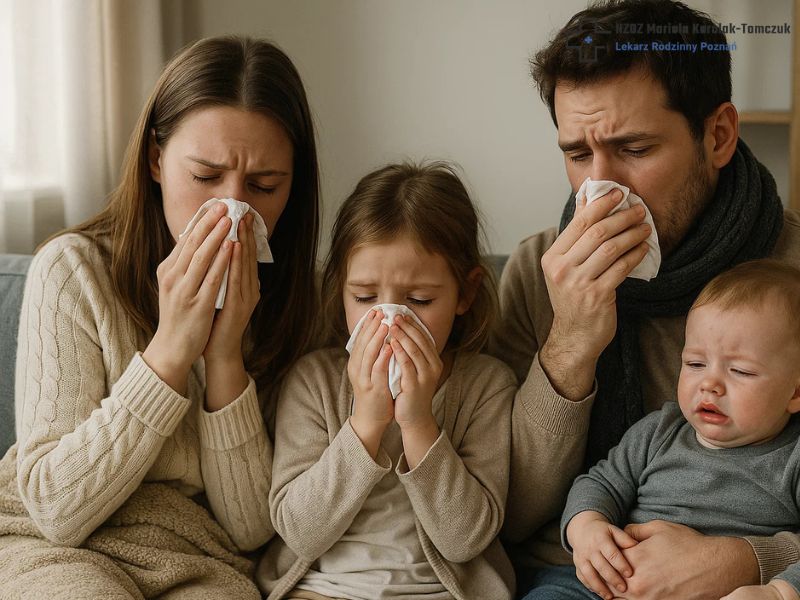
RSV infections appear in Poland every year, but the turn of November and December is when the virus begins to cause the highest number of illnesses. This applies to both the entire country and large cities like Poznań - where population density, nurseries, kindergartens, and public transport facilitate the rapid spread of respiratory infections. RSV is particularly dangerous for infants, young children, seniors, and immunocompromised individuals. At the same time, its first symptoms are often mistaken for a common cold, which is why conscious recognition of symptoms and rapid response are so important.
What is RSV and why is it dangerous?
RSV (Respiratory Syncytial Virus) is a virus that primarily attacks the lower respiratory tract. In many adults, it can cause mild symptoms, but in children - especially those under 2 years of age - it is one of the most common causes of bronchiolitis and pneumonia. The infection spreads very easily: through coughing, sneezing, contact with secretions, or infected objects. During late autumn and winter, when residents of Poznań spend more time in closed, heated rooms, the risk of infection increases several times over.
What are the first symptoms of RSV?
Initial symptoms may resemble a common cold, which is why many parents only consult a doctor when the child's condition begins to deteriorate. The most common symptoms include:
- watery runny nose and snuffling,
- light cough that becomes deeper over time,
- low-grade fever or fever,
- restlessness, sleep problems,
- decreased appetite.
In infants and young children, the following are also characteristic:
- rapid breathing,
- wheezing,
- difficulty breathing, visible flaring of the nostrils,
- bluish tint to the lips or nails (in severe cases),
- feeding problems.
In Poznań, pediatricians observe a particularly high number of cases among children attending nurseries and kindergartens, where infections spread very intensively.
When is RSV particularly dangerous?
Those most at risk are:
- premature babies and infants up to 12 months old,
- children with heart disease or chronic lung diseases,
- seniors,
- immunocompromised individuals,
- patients with respiratory system diseases.
In these groups, RSV can lead to severe complications such as:
- pneumonia,
- bronchiolitis,
- dehydration,
- exacerbation of asthma and chronic diseases,
- need for hospitalization.
How to handle a suspected RSV infection?
In case of suspected RSV, the following are key:
1. Observation of symptoms
Any worsening of the cough, excessively rapid breathing, feeding problems, or visible shortness of breath requires urgent contact with a doctor.
2. Proper hydration
Children - especially infants - dehydrate quickly, so care should be taken to offer fluids frequently.
3. Nasal clearing
This helps reduce discomfort and makes breathing easier during sleep and feeding.
4. Symptomatic treatment
RSV is not treated with antibiotics. The following are primarily used:
- antipyretic medications,
- saline nebulization,
- air humidification,
- rest and observation.
5. Urgent contact with a doctor when alarm symptoms appear
Symptoms requiring immediate medical consultation include:
- difficulty breathing, faster breathing,
- bluish tint to the lips or skin,
- lethargy or significant weakness,
- refusal to eat and drink,
- high fever that does not respond to treatment.
During the autumn-winter period in Poznań, family doctors note a clear increase in patients presenting with acute respiratory infections, which is why recognizing RSV symptoms and taking rapid action is of particular importance.
How to prevent RSV infection?
Although the risk cannot be completely eliminated, it can be significantly reduced. The most important rules:
- frequent hand washing,
- avoiding contact with sick people,
- regular ventilation of rooms,
- disinfection of objects used by children,
- avoiding crowded places during the infection season (particularly important in a large city like Poznań).
Diagnostics and treatment - when to contact a primary care physician (POZ)?
Any infection accompanied by shortness of breath, deterioration of the general condition, or symptoms persisting longer than a few days requires consultation with a primary care physician. This applies to both children and adults. In Poznań, where an increase in respiratory infections is recorded in autumn and winter, rapid contact with a POZ doctor is particularly important due to the risk of rapid health deterioration.
If you are not assigned to any primary care physician or wish to change clinics, you can use the registration instructions available here: Kontakt i rejestracja
If symptoms make it difficult to visit the facility in person, it is possible to use telemedicine advice in Poznań: /porady-telemedyczne-poznan